Chapter 3: Assistance Options
IN THIS LESSON
When Living Elsewhere Becomes Necessary
Recognizing the Signs and Making Difficult Decisions with Love
The Heart of a Difficult Decision
Moving your loved one from their home is one of the hardest decisions you'll face as a caregiver. It often feels like giving up or admitting failure. It's not. Sometimes, the most loving thing you can do is recognize when home is no longer the safest place for them.
This lesson helps you: Identify the clear signs that indicate when additional care is needed and understand that making this decision comes from love, not inadequacy.
Health and Medical Indicators
Declining Health and Increased Medical Needs
What you might observe:
Frequent medical appointments that are difficult to manage from home
Chronic conditions requiring professional monitoring throughout the day
Repeated infections or health crises that could be prevented with closer supervision
Recovery from illness or surgery taking much longer than expected
The tipping point: When medical needs require more professional oversight than you can safely provide at home, even with home health services.
Mobility and Fall Risks
Warning signs:
Multiple falls, even minor ones, indicating increasing instability
Difficulty using mobility aids safely (walkers, canes, wheelchairs)
Fear of falling that limits their movement and independence
Inability to get up from falls without assistance
Safety reality: Falls can be life-threatening for elderly adults, especially those with cognitive impairment who might not remember how they fell or how to call for help.
Safety Concerns That Can't Be Ignored
Home Safety Becomes Unmanageable
Red flags:
Getting lost or confused within their own home
Inability to safely navigate stairs or different levels
Leaving stoves on, doors unlocked, or water running
Not recognizing safety hazards (hot surfaces, electrical issues, slippery floors)
Wandering and Getting Lost
Especially concerning for dementia: Episodes of leaving home and becoming disoriented, even in familiar neighborhoods.
The danger: Wandering can lead to exposure, injury, or getting lost for hours or days.
When home isn't safe: If you can't ensure they won't leave unsupervised, more secure care may be necessary.
Daily Living Becomes Overwhelming
Personal Care Challenges
When assistance becomes constant:
Requiring help with bathing, dressing, grooming, and toileting
Forgetting to eat meals or take medications
Inability to maintain basic hygiene independently
Confusion about day and night routines
The complexity: These needs often require professional training to manage safely and with dignity.
Household Management Breakdown
Signs of declining ability:
House becoming unsafe or unsanitary despite help
Inability to manage cooking without fire or safety risks
Confusion about household routines and maintenance
Difficulty managing mail, bills, or phone calls even with assistance
Cognitive Decline Impact
Memory Loss Affecting Safety
Critical concerns:
Severe memory loss affecting recognition of family members
Forgetting how to perform basic safety tasks
Not remembering recent conversations or instructions about safety
Confusion about familiar people and places creating anxiety
Decision-Making Becomes Dangerous
When judgment is severely compromised:
Making decisions that put them at risk (letting strangers in, inappropriate financial choices)
Inability to recognize dangerous situations
Poor judgment about personal safety (going outside inadequately dressed, not recognizing when they need help)
Social and Emotional Factors
Isolation and Loneliness at Home
The downward spiral:
Limited social interaction leading to increased depression
Loss of spouse or friends making home feel empty and sad
Anxiety about being alone, especially during emergencies
Depression affecting their willingness to engage in self-care
Why this matters: Social isolation can accelerate cognitive decline and increase depression, creating additional safety risks.
When Depression and Anxiety Become Overwhelming
Signs that professional support is needed:
Persistent sadness or hopelessness
Anxiety about daily activities or being alone
Loss of interest in everything they previously enjoyed
Expressions of wanting to "give up" or not wanting to continue
Caregiver Factors: Your Wellbeing Matters Too
Recognizing Caregiver Stress and Burnout
Honest self-assessment questions:
Are you experiencing health problems from caregiving stress?
Do you feel overwhelmed or resentful most days?
Are you isolated from your own support systems?
Is caregiving affecting your work, relationships, or health?
The 24/7 care reality: When your loved one needs round-the-clock supervision that exceeds what you and your support network can safely provide.
Remember: Recognizing your limits isn't failure—it's wisdom.
Health and Nutrition Decline
Nutritional Concerns That Signal Change
Warning signs:
Unexplained weight loss despite adequate food availability
Signs of malnutrition or dehydration
Forgetting to eat meals or refusing food
Difficulty preparing safe, nutritious meals
Why this matters: Poor nutrition accelerates cognitive decline and increases vulnerability to illness and falls.
Medication Management Issues
Safety concerns:
Forgetting to take prescribed medications
Taking too much or too little medication
Confusion about which medications to take when
Dangerous interactions from medication errors
Healthcare System Indicators
Frequent Hospitalizations
Pattern recognition:
Multiple emergency room visits for preventable issues
Recurring health crises that could be avoided with better supervision
Prolonged recovery times after illness or surgery
Discharge planning that repeatedly identifies home as unsafe
Special attention needed: If frequent hospitalization is occurring, pay special attention to Lesson 3 on Discharge Planning.
Inadequate Home Care Options
When current support isn't enough:
Limited availability of quality professional home care in your area
Inability to afford enough hours of professional care
Decline in care quality due to limited caregiver capacity
High turnover of home care workers creating instability
Family and Communication Concerns
When Worry Becomes Constant
Persistent concerns that indicate change may be needed:
Constant worry about their safety when they're alone
Unable to concentrate on your own responsibilities due to concern
Family members expressing repeated worry about their wellbeing
Emergency calls or situations becoming frequent
Communication Breakdown
Signs that home care coordination is failing:
Inability to effectively communicate with your loved one about their needs
Misunderstandings about care instructions or safety
Different family members receiving conflicting information about their condition
Care providers unable to communicate effectively with your loved one
Living elsewhere options
-
Assisted Living Facility
Senior living setting for residents who are mobile and don't have hi-tech/skilled needs. Some also have units (Memory Care) for residents whose safety judgement is impaired. The criteria can vary quite a bit from facility to facility. Some also have "tiers" or a la carte options if additional care is needed.
Payer: usually out of pocket. Few accept Medicaid.
-
Personal Care Home
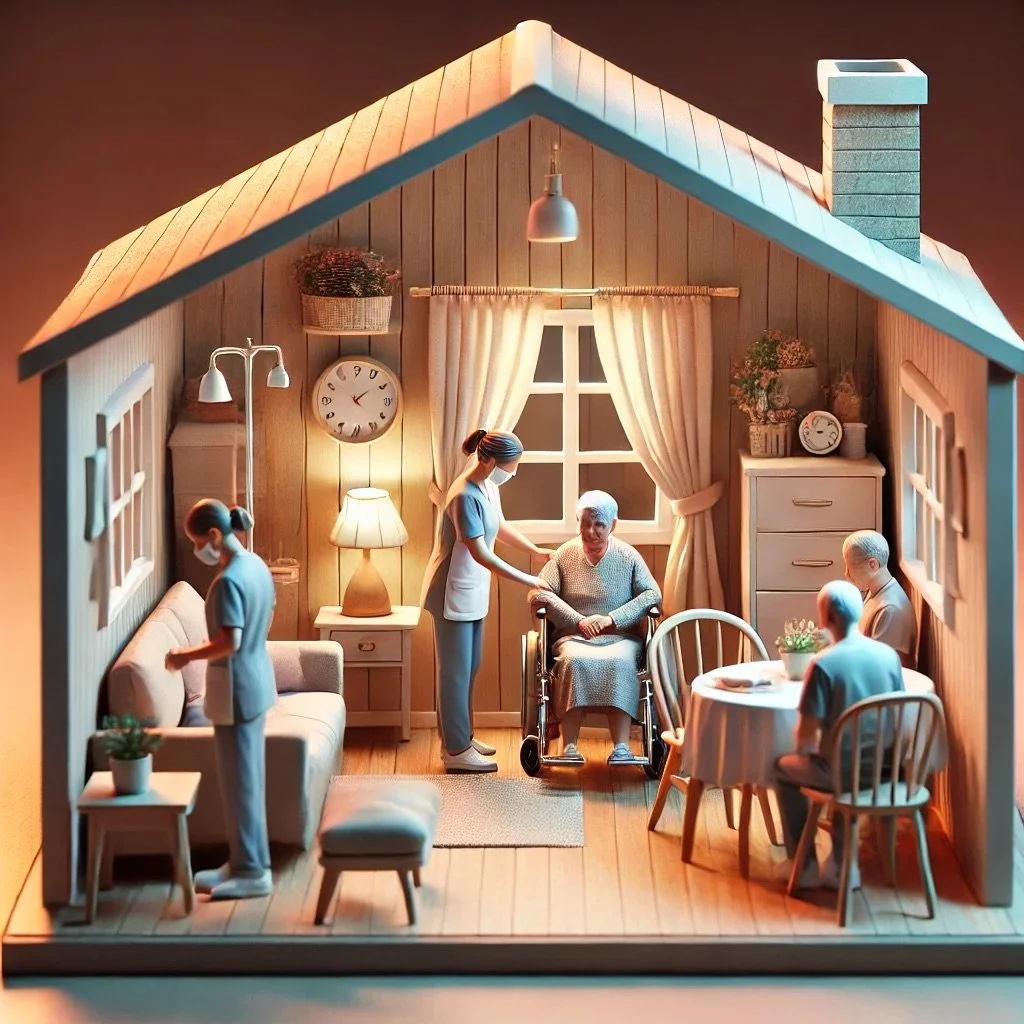
Like a mini-assisted living in a personal home. Usually costs less.
Payer: usually out of pocket. Few accept Medicaid.
-

Long term care facilities or Nursing homes
FYI - you may find many facilities are both custodial/long term care and short term therapy/rehabilitation-Skilled Nursing Facility.
Often after a hospital stay, a patient may go there for therapy and have to stay because their needs cannot be met at home or in the community. Here is a Guide for choosing Nursing Homes (starting page 7) and lots of additional information for alternate services and coverage
Here is a Checklist to vet Nursing home facilitiesPayer: usually Medicaid. Unless you can afford out of pocket.
Below provides a general idea of a facility’s criteria for entry and to remain.
If your loved-one requires a higher level of care they may have to transition from an ALF to Long Term Care, which offers the highest level of care.
There are some communities called Continuing Care Retirement Communities that allow transitions within. More about them in the “Alternate Options…” link above.
Admission Criteria
-
ALF admission criteria
and for the most Personal Care Homes
Assessment of Care Needs:
Prospective residents are usually required to undergo an assessment to determine their care needs. This helps the facility understand if they can provide the level of care required.Mobility and Functioning:
Residents should be able to move around with the help of mobility aids or limited assistance. If the individual requires extensive medical care or assistance with most daily activities, they may need a higher level of care than what an assisted living facility can provide.Medical Condition Stability:
While some health conditions are manageable in an assisted living setting, individuals with complex medical needs or conditions that require round-the-clock medical supervision may not be suitable for admission.Cognitive Function:
Residents are typically required to have a certain level of cognitive function to ensure they can participate in their care decisions and follow safety guidelines within the facility. Some ALFs have Memory Care units for those with dementia.Behavioral Considerations:
Facilities often assess individuals for behaviors that may pose a risk to themselves or others. Those with severe behavioral issues may require a different type of care setting.Financial Eligibility:
Some facilities have financial criteria that residents must meet, either through private payment, long-term care insurance, or other means.Legal Capacity:
Prospective residents must have the legal capacity to enter into a contract or have a legally authorized representative who can make decisions on their behalf. -
Nursing Home Admission Criteria
Medical Needs:
Chronic illnesses or conditions that require ongoing medical attention.
Post-surgical care requiring skilled nursing.
Management of severe pain, wounds, or complex medical treatments.Functional Status:
Significant limitations in performing ADLs such as bathing, dressing, eating, mobility, and toileting.
Cognitive impairments such as dementia or Alzheimer's disease that necessitate constant supervision and care.Safety Concerns:
The individual is unable to live safely at home due to risks like falls, wandering, or inability to manage medications.
The home environment is deemed unsafe or unsuitable for the individual's care needs.Caregiver Availability:
Lack of available or capable family members or caregivers to provide the necessary level of care at home
Caregivers experiencing burnout or unable to continue providing adequate care.Financial Considerations:
Ability to pay for nursing home care through private funds, long-term care insurance, or qualifying for Medicaid.
Completion of necessary financial assessments and paperwork for Medicaid eligibility if applicable.Assessment by the Nursing Home:
The nursing home may conduct its own assessment to ensure they can meet the individual's specific care needs and that the patient fits their admission criteria.
Making the Decision: A Framework for Clarity
Weighing Quality of Life Factors
Questions to consider honestly:
Is staying home enhancing or diminishing their quality of life?
Are they happier and more engaged, or anxious and isolated?
Can their care needs be met safely in their current environment?
What would they want if they could see their situation clearly?
Family Impact Assessment
Realistic evaluation:
Is the current situation sustainable for all family members?
Are other relationships suffering due to caregiving demands?
Is anyone's health or wellbeing at risk from the current arrangement?
Professional Perspectives
Valuable input sources:
Healthcare providers' honest assessment of safety at home
Home health professionals' observations about care needs
Social workers' evaluation of family dynamics and resources
Geriatric care managers' professional recommendations
Moving Forward with Love and Wisdom
Reframing the Decision
Instead of thinking: "I'm giving up on them" or "I'm putting them away"
Try thinking: "I'm ensuring they receive the professional care they need" or "I'm making sure they're safe and well-cared for"
Involving Your Loved One
When possible:
Include them in discussions about care options
Visit potential care settings together
Ask about their preferences and concerns
Reassure them about continued family involvement
When cognitive impairment is severe: Make decisions based on what they would have wanted when they were able to think clearly, prioritizing their safety and dignity.
Signs It's Time: A Checklist
Consider living elsewhere when you check multiple boxes:
☐ Safety risks at home outweigh the benefits of familiar environment
☐ Care needs exceed what can be safely provided at home
☐ Social isolation is affecting their mental health
☐ Family caregivers are experiencing burnout or health issues
☐ Frequent emergencies or hospitalizations are occurring
☐ Professional care providers recommend higher level of care
☐ Quality of life would improve with professional support and social engagement
Remember: This Decision Comes from Love
Your motivation: Ensuring your loved one receives the best possible care and maintains dignity and safety.
Your continued role: Moving to a care facility doesn't end your caregiving—it changes it. You become their advocate, visitor, and emotional support in a new setting.
The outcome: When done thoughtfully, this transition can actually improve quality of life for everyone involved, including your loved one.
Important Consideration
Picking a facility…
Easy access! Close to family that's going to visit often
Family engages with staff, asks questions and gets answers that make sense
Family is not afraid to ask questions. Staff is receptive to questions
Family routinely assists with/provides personal care (bathing and dressing). By doing this, you get visuals of their skin status, arm and leg movement (no mysterious fractures), pain or anything different from the usual.
To Do
-
You can use the same Medicare link to rate and compare services and facilities or go online, use word of mouth…
-
- Gather facility contact information
- Have your questions ready (use corresponding linked checklists) or make your own
- Ask their criteria to participate/admit and the process to move forward
- If potential, schedule a visit
-
Use checklist for nursing homes (can also use for other facilities).
-
Glossary of relevant terms and definitions. A useful tool to equip you along your caregiver journeycare insurance
-
Guide for choosing Nursing Homes(starting page 7) and lots of additional information for alternate services and coverage. The same Nursing Home Questions below is on pages 31-39 is in this resource.
-
Checklist of what to ask Nursing home facilities
-
Click here for Medicare rating of some nursing facility providers. Enter your location to compare facilities in your area.
Otherwise run a good Google search, check reviews and have your questions ready when you reach out
Resources
Now You Know:
If an alternate living setting is an option
Have an idea of facility criteria and payer source
How to vet potential facilities
Discharge Planning is next
Even if you currently are not experiencing a loved-one in the hospital or rehab, still do a quick review.
Remember vulnerable times are not the best time to absorb information and get creative.
So proceed and take a look