
Medicare vs Medicaid
30+ years of doing this, and Medicare and Medicaid still trip up more families than almost anything else. Not because people are careless, because nobody ever actually sat them down and explained the difference in plain language.
Get this mixed up and here's what happens: you miss benefits your loved one actually qualifies for. You make financial decisions based on a wrong assumption. You delay care while you're still trying to sort out who's paying for what.
Let's fix that.
Medicare: the basics
Medicare is federal, and it's not about income. It's mainly for people 65 and older, but also covers under-65 with certain disabilities (after 24 months on Social Security Disability), and any age with End-Stage Renal Disease or ALS.
A millionaire and someone with nothing saved can both qualify at 65. That's the one detail people get wrong most often, so remember it.
What it covers:
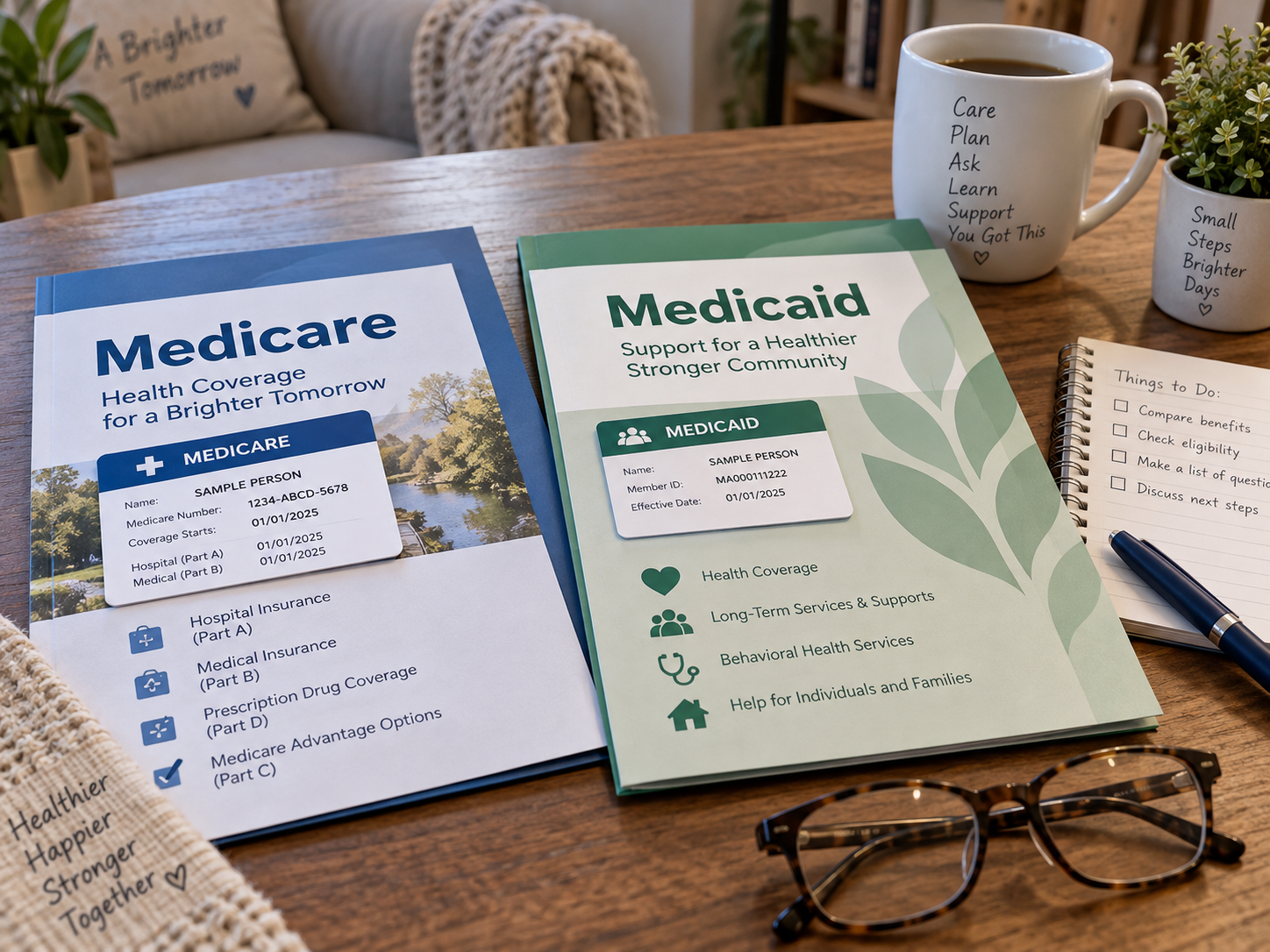
Part A, hospital stays, skilled nursing, hospice, some home health.
Part B, doctor visits, outpatient care, equipment, preventive services.
Part C, Medicare Advantage, private plans replacing A and B.
Part D, prescriptions.
What it doesn't cover, and this is the part that blindsides families:
Long-term custodial care. Most dental. Vision, outside specific conditions. Hearing aids. Cosmetic surgery.
If someone tells you Medicare will cover the nursing home long-term, that's wrong. It covers a limited window of skilled care after a hospital stay. That's it.
Medicaid: the basics
Medicaid is need-based, joint federal and state, and it varies by state more than people expect.
Who qualifies: low-income individuals and families, pregnant women and kids under income limits, adults with disabilities within income and asset limits, elderly individuals with limited income and assets.
What it covers, and this is where it picks up everything Medicare drops:
Long-term care, nursing homes, assisted living in some states. Personal care services. Real dental coverage. Vision. Transportation to appointments. Much more extensive home and community-based services.
The gap between these two programs is exactly where families get caught off guard, usually the moment they realize Medicare stopped covering the long-term care they assumed it would.
Can Someone Have Both?
Yes! People who qualify for both Medicare and Medicaid are called "dual eligibles." This actually provides excellent coverage because:
Medicare pays first for covered services
Medicaid picks up Medicare costs (premiums, deductibles, co-pays)
Medicaid covers services Medicare doesn't (like long-term care)
Common Misconceptions
Myth 1: "Medicare covers nursing home care"
Reality: Medicare only covers skilled nursing care for a limited time after a hospital stay. Long-term custodial care is primarily covered by Medicaid.
Myth 2: "You have to be poor to get Medicaid"
Reality: While income-based, many middle-class families become eligible for Medicaid when facing long-term care costs. There are also special programs for people who "spend down" their assets.
Myth 3: "Medicaid is just for young, poor people"
Reality: Actually, most Medicaid spending goes toward elderly and disabled individuals, particularly for long-term care services.
Myth 4: "If you have Medicare, you’re covered"
Reality: Medicare has significant gaps, especially for long-term care. Some can benefit from both programs for comprehensive coverage or know how to address those gaps.
What This Means for Your Caregiving Decisions
Planning for Long-Term Care:
If your loved one may need extended care assistance, Medicaid planning becomes crucial because Medicare won't cover it. This might involve:
Consulting with an elder law attorney
Understanding your state's Medicaid rules
Planning financially for potential long-term care needs
Medication Coverage:
If your loved one has both programs, Medicaid may cover what’s not covered by Medicare
Medicare Part D has a coverage gap ("donut hole") that Medicaid can help fill
Home Care Services:
Medicare provides limited home health services
Medicaid often covers more comprehensive home and community-based services
When to Apply for Each Program
Medicare:
Apply 3 months before turning 65
If disabled, you're automatically enrolled after receiving Social Security Disability for 24 months
Late enrollment can result in permanent penalties
Medicaid:
Apply when you meet the financial criteria
No penalties for late application
Can apply at any time throughout the year
Processing can take 30-90 days
State Variations Matter
One of the most confusing aspects of Medicaid is that each state runs its own program within federal guidelines. This means:
Income limits vary by state
Covered services differ between states
Application processes vary
Some states have expanded Medicaid, others haven't
Important: Always check your specific state's Medicaid program details (link below), as what's true in one state may not apply in another.
Red Flags: When to Seek Professional Help
Consider consulting with professionals when:
Your loved one needs long-term care and you're not sure about coverage
You're dealing with complex financial situations involving both programs
You need help with Medicaid planning strategies
You're facing denials or coverage disputes
You're considering major financial decisions that could affect eligibility
Practical Next Steps
If your loved one is approaching 65:
Sign up for Medicare 3 months before their 65th birthday
Evaluate their financial situation to see if they might also qualify for Medicaid
Consider long-term care insurance if they don't qualify for Medicaid now and you foresee custodial needs
If facing immediate care needs:
Determine current coverage - Medicare, Medicaid, or both?
Understand what's covered for the specific care needed
Explore all available programs in your state
Get professional guidance for complex situations
Remember: These programs are complex, and rules change. When in doubt, contact the programs directly or consult with professionals who specialize in elder care planning.
Getting Help
For Medicare questions:
Medicare.gov or call 1-800-MEDICARE
State Health Insurance Assistance Program (SHIP) for free counseling
For Medicaid questions:
Area Agency on Aging for local resources
Elder law attorneys for complex planning needs
As caregivers, we have enough to worry about without being confused by healthcare programs. Understanding Medicare vs. Medicaid is one more tool in your toolkit for advocating effectively for your loved one while protecting your family's financial future.
Need support navigating the overwhelming world of caregiving decisions and healthcare systems? Reach out
If you want the deeper walkthrough, dual eligibility, the myths that catch families off guard, and exactly what to ask before a hospital discharge, "Medicare vs. Medicaid: What Every Caregiver Needs to Know" is in Clarity & Next Steps.