
When You Have to Make the Call Nobody Wants to Make
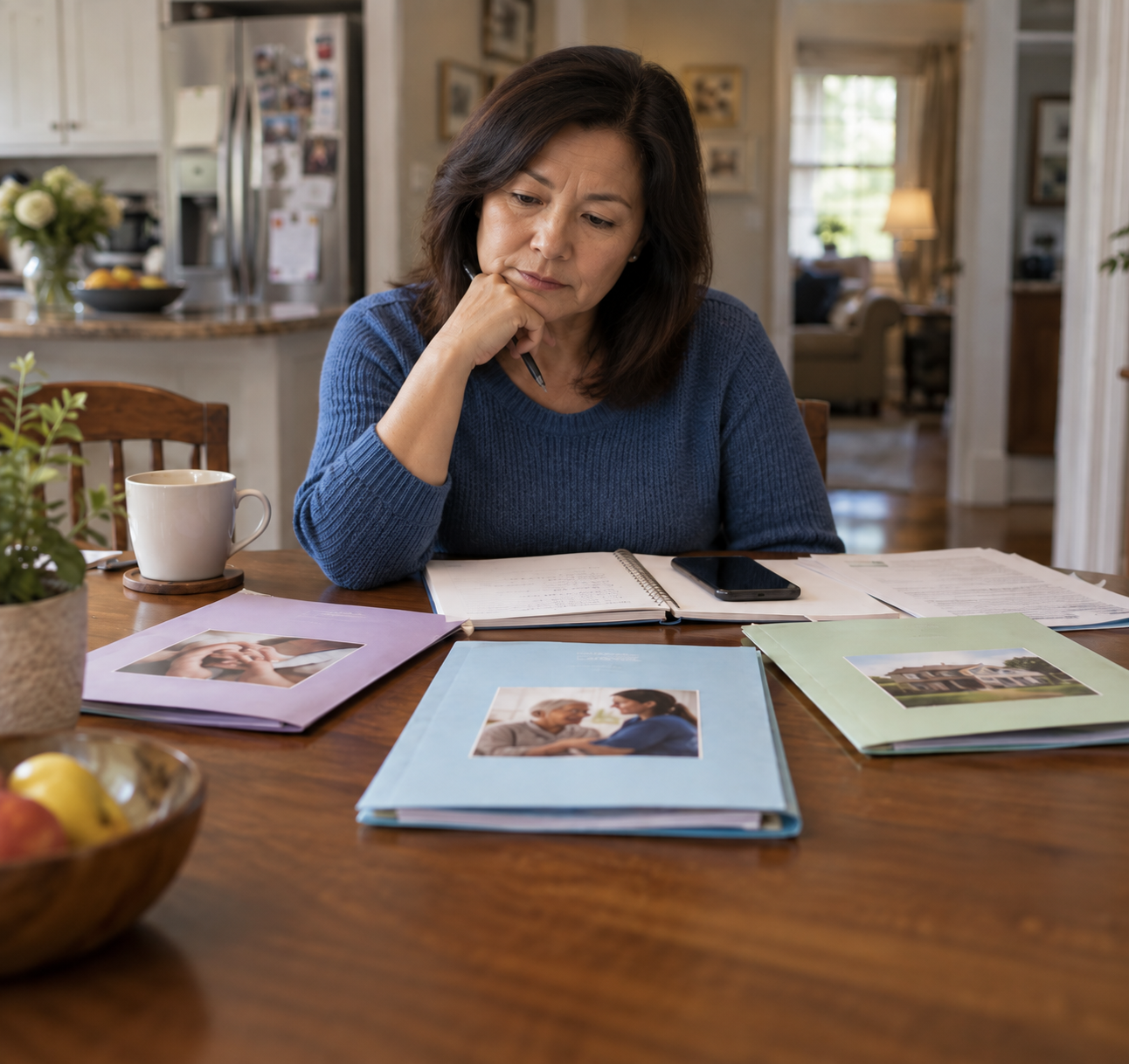
Welcome to the club nobody wants to join.
The brochures for assisted living are spread across the kitchen table. Or it's the surgeon's number for your 85-year-old father. Or it's finally taking Mom's car keys.
Your chest is tight. You're frozen.
I've sat across from families in this exact moment more times than I can count. There's no manual. And whoever's making this call almost never feels qualified to make it, even when they're exactly the right person.
Why this messes with your head
Sometimes the stakes really are life-or-death, no do-overs, no trial run.
You're suddenly supposed to understand medicine, insurance, facility rules, and legal paperwork nobody trained you for. Meanwhile the guilt never shuts up. What if I'm wrong. What if I'm giving up too soon. What if I'm not doing enough.
And everyone's got an opinion. The cousin who hasn't visited in two years suddenly knows exactly what Dad needs. The neighbor's got a nursing home horror story locked and loaded. None of it helps, because this isn't a spreadsheet decision. It's someone you love.
The paralysis trap
The research rabbit hole. Every article, every Facebook group, every opinion collected. Feels like diligence. Is actually stalling.
The perfection hunt. Looking for the option that fixes everything and upsets nobody. Doesn't exist. Never has.
The waiting game. Hoping for a clearer sign, a cleaner diagnosis, someone else to just decide already. Time doesn't wait with you.
The avoidance dance. One more appointment. One more opinion. Let's just get through the holidays first. Anything but the actual choice.
I've watched families lose months in this loop. The situation doesn't hold still and wait for certainty. It rarely does.
How you actually move
Drop the search for perfect. You're picking between hard options, each with a cost. Ask "what's the best move with what I know right now," not "what's the right answer."
Nail down what actually matters. Three priorities, dignity, comfort, safety, whatever it is for your family. Then pick the option that honors those, not the one that avoids every possible regret.
Separate what's real from what's scary. Two columns. What you actually know. What you're afraid might happen. Most of the freeze lives in that second column.
Bring them in when you can. If your loved one can weigh in, ask them directly what matters most and what scares them most. It'll complicate things. Ask anyway.
Give yourself a deadline and hold it. Enough time to gather real information. Not one day more.
Cut the consultation list down. Doctors for medical. A case manager for logistics. One or two people for support. More voices doesn't mean more clarity. Usually the opposite.
Remember doing nothing is still a choice. Picture this same decision, still unmade, six months from now. Sometimes that picture is worse than any imperfect choice in front of you.
If it goes sideways anyway
The facility isn't what you hoped. The treatment doesn't work. The home care falls apart. It happens.
Most of these decisions can be adjusted. Needing to change course isn't proof you got it wrong the first time. It's proof you're paying attention.
Your move
Name the decision that's actually got you stuck. Write your top three priorities next to it. Then ask yourself, honestly, what's the best call with what you've got right now. Not the perfect one. The best one available today.