
They Almost Fell, and Nobody Mentioned It
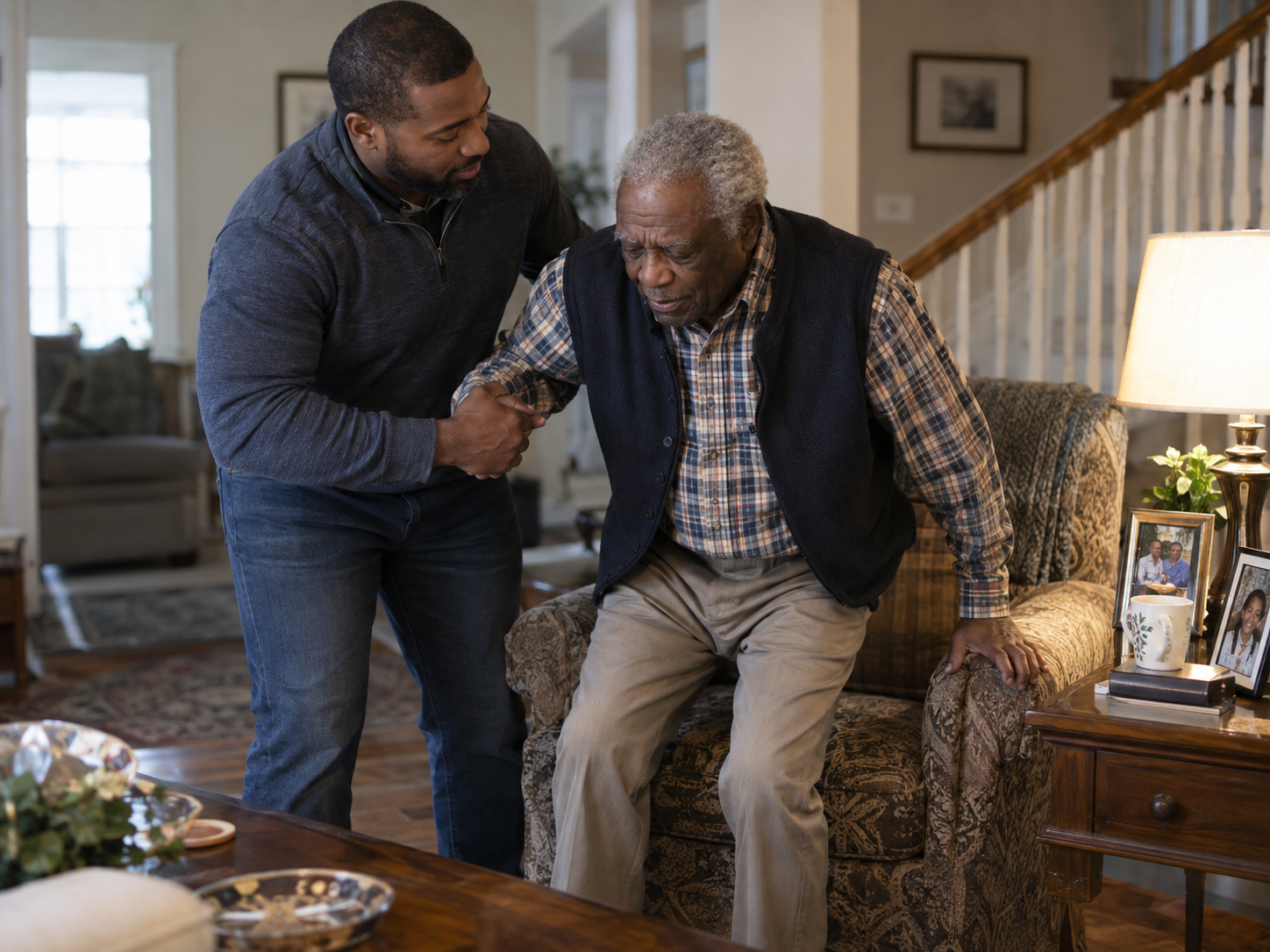
He caught himself on the chair. Didn't fall. Laughed it off. Nobody brought it up again.
That's the one that gets missed almost every time.
Families report the fall that ended in a hospital visit. The one that scared everyone enough to actually call someone. What gets left out, almost always, is the save right before it, the stumble, the grab for the wall, the moment that didn't turn into anything, this time.
A near-fall isn't nothing. It's often the earlier warning, the one that shows up before the real one does.
Why it gets brushed off
Nobody wants to make a big deal out of something that "didn't even happen." She's embarrassed. You don't want to hover. It's easier to let it go than to sit her down and talk about it.
But a near-fall means something changed, balance, strength, awareness, medication, something. And it rarely happens just once. If you go back and actually think about it, honestly, there's usually been more than one.
What to actually ask
Not "are you okay," she'll say yes regardless. Ask specifically: when did this happen, what were you doing, were you holding onto something, did you feel dizzy or did your leg just give out.
Write it down. Date, what happened, what she was doing. One near-fall is a data point. Three in a month is a pattern, and a pattern is exactly what a doctor needs to hear, not "she seems a little unsteady lately."
Don't wait for the real fall to take this seriously
If it's happened more than once, that's worth a real conversation with her healthcare provider, not a mental note you'll mention "next time it comes up."
If you want a structured way to watch for this and everything else around mobility, the "Is It Safe, or Are They Just Getting By?" guide in Clarity & Next Steps walks through exactly what to observe, plus a worksheet built for tracking this kind of thing over time.