
The Hidden Struggles
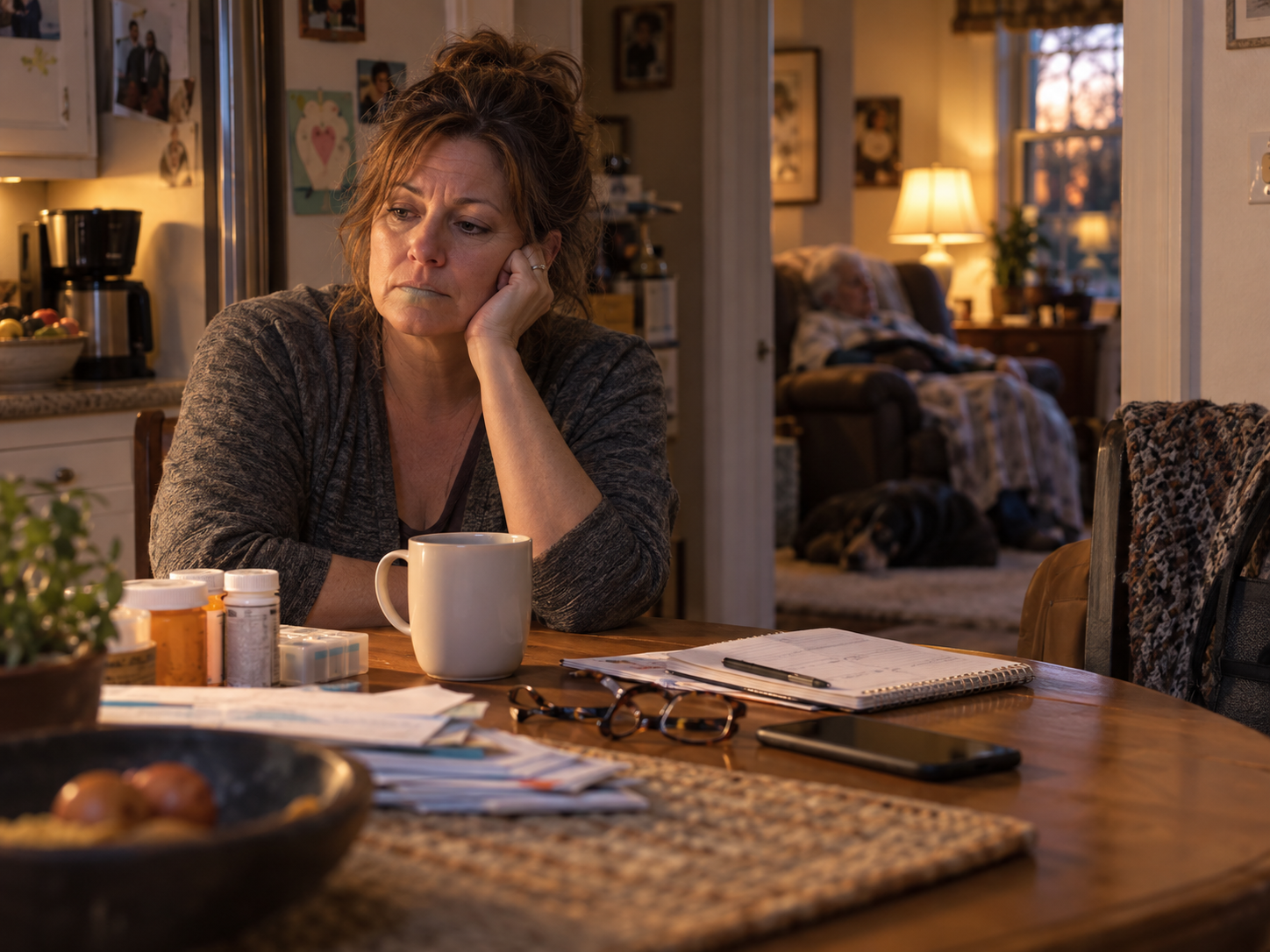
Whether you're clocking in at the hospital, managing cases for an insurance company, or caring for your own mother at home, caregiving carries weight nobody outside it really sees. I've worn most of these hats myself, some of them still.
Here's what unites all of them, whichever side of it you're standing on.
The identity eclipse
This is the deepest one, not exhaustion, not overwhelm, the slow disappearance of who you were before this took over. Nurses and case managers start describing themselves as "just a nurse." Family caregivers become "just the one who handles everything."
One day you realize you can't remember what you used to enjoy before this ate your calendar. Every conversation is medications, approvals, someone else's needs. Your own life starts to feel like the selfish thing.
Decision fatigue, from both directions
Healthcare workers make heavy calls all day at work, then go home and make more of them for their own family. Family caregivers get thrown into medical terminology and insurance rules they never asked to learn, and suddenly every choice feels like it could be the wrong one.
That constant weight of "what if I get this wrong" is exhausting in a way that doesn't show up on a resume or a family group chat.
The financial strain, hitting both sides
Healthcare workers pick up extra shifts to stay afloat, trading their own wellbeing for a paycheck. Family caregivers cut hours, leave jobs, drain savings.
The cruel part: the people who spend their lives caring for others often can't afford real care for themselves.
System exhaustion
Insurance denials. Prior authorizations. Endless scheduling conflicts. The systems built to help people often end up wearing them down instead. Professional caregivers fight these battles on behalf of patients, usually without much support for their own mental health in the process. Family caregivers get thrown into learning these systems cold, often while grieving or managing their own health at the same time.
The perfectionism prison
Caregivers, by nature, tend to be perfectionists. Never lose patience. Always know the right thing to say. Be endlessly available. Make the perfect call, every time, under pressure.
That standard turns into a prison where being human feels like failing. Rest feels selfish. A boundary feels cruel. None of that is true, but it's exactly how it feels inside the role.
What nobody actually tells you
None of this means you're weak, or in the wrong line of work, or doing it badly. It means you're human, doing something genuinely hard without nearly enough support around you.
The goal was never to eliminate these struggles. It's building the tools to carry them without losing yourself in the process. Taking care of yourself isn't the selfish move here. It's what makes any of this sustainable at all.
You're not the only one carrying this
If something in here landed, you're not alone in it. These aren't small complaints, they're real, and they're shared by millions of people showing up every day despite how hard it is.
Struggling with this doesn't make you less compassionate. Being exhausted doesn't make you less dedicated. It makes you someone doing something difficult, and still doing it.
Want to work through what this actually looks like for you? Reach out and let's talk through it.