
Skilled vs. Non-Skilled Care
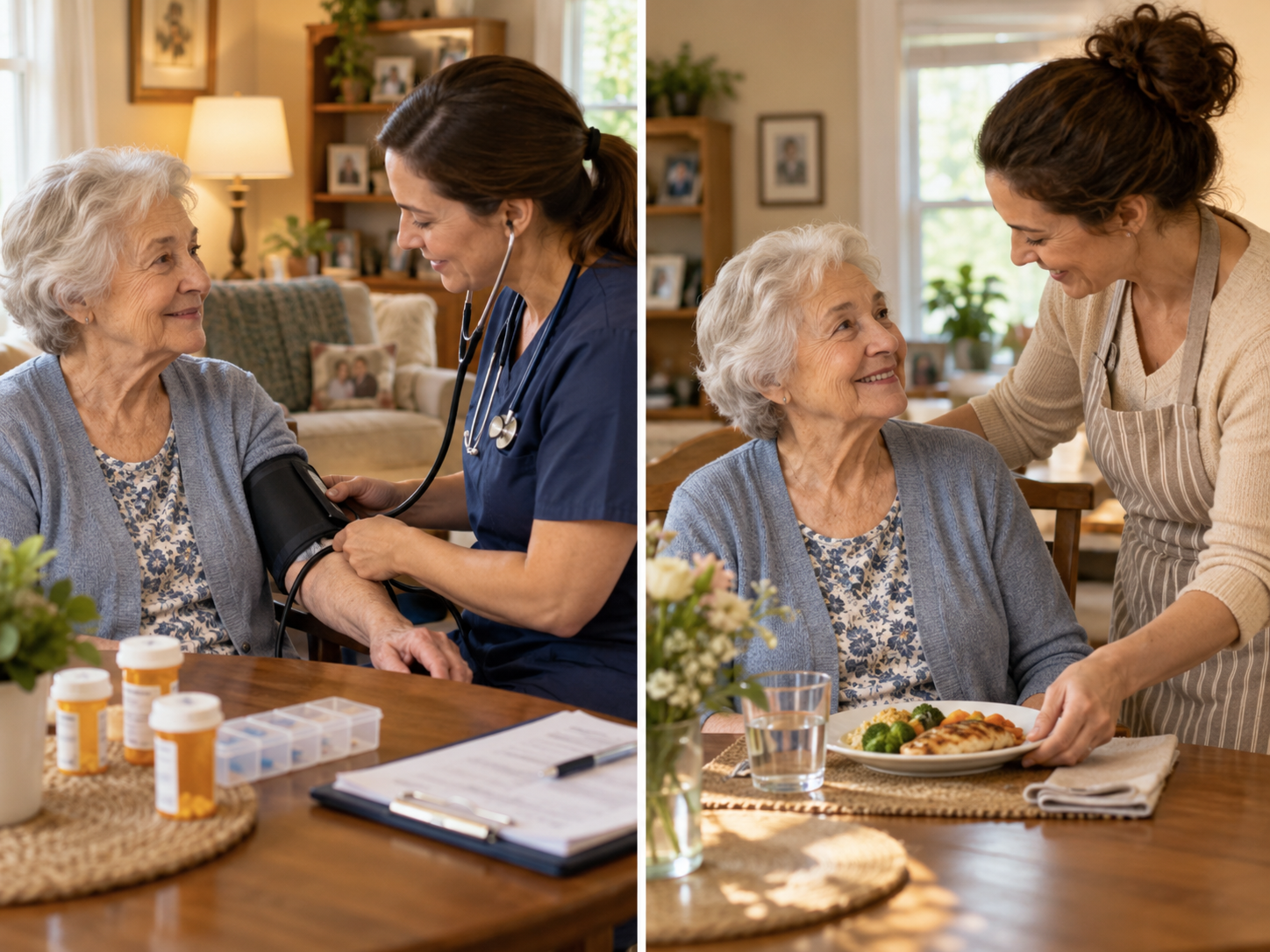
Skill vs Nonskill
The Difference That Decides What You Pay
Here's the sentence that trips up more families than almost anything else: "the doctor said she needs help at home."True. Doesn't mean insurance is paying for it.
Whether something's covered comes down to one distinction: is this skilled care, or non-skilled care. Get this straight and you'll save yourself real money and a lot of wasted arguing with an insurance line.
Skilled care: needs a license to provide it safely
Nursing, therapy, medical services, anything that legally requires a trained professional. Wound care, IV therapy, managing complex equipment. Physical therapy after a stroke or surgery. Occupational therapy relearning how to dress or cook. Speech therapy for swallowing or communication. Medical social work, usually alongside one of the others.
Medicare actually covers a lot of this. Part A covers skilled nursing facility stays up to 100 days when criteria are met. Part B covers outpatient PT, OT, and speech. Home health covers skilled services at home if you're homebound and meet requirements. Medicaid, private insurance, long-term care insurance, and VA benefits can all help too.
One catch: none of this is automatic. It requires a physician's order and has to meet specific medical criteria.
Non-skilled care: the help that keeps someone safe day to day
Bathing, dressing, toileting, eating, mobility help. Supervision. Meal prep, light housekeeping, medication reminders. Transportation. This is what most families actually need most, especially with dementia, and it's exactly what a trained caregiver can provide without a medical license.
Here's the hard truth: Medicare generally does not cover this. Even when it's essential. Even when it's the only thing standing between someone and a fall. It may get covered when it's bundled alongside a skilled service, but as its own standalone need, you're largely on your own.
Your actual options: private pay, often $30 to $50+ an hour. Medicaid, if your loved one qualifies financially. Long-term care insurance, built specifically for this. VA Aid and Attendance for qualifying veterans. And, realistically, family.
This is the gap that blindsides people. The care someone needs most is frequently the care regular insurance won't touch.
Two examples that make it click
Post-stroke: PT to regain walking, OT to relearn dressing, speech therapy for communication, Medicare typically covers this. Meanwhile, help bathing during recovery, meal prep, companionship, that's usually out of pocket.
Dementia at home: Nursing visits for complex medication management, Medicare may cover it if criteria are met. Daily supervision, help with bathing and dressing, companionship, that's private pay, Medicaid if eligible, or family, not Medicare.
Why Medicare draws the line here
Medicare is built for medical treatment and short-term recovery, not ongoing daily living support. Skilled care has to be physician-ordered, medically necessary, delivered by a licensed professional, and show potential for improvement or maintained function. Custodial care gets classified as "maintenance," not "medical treatment," and that's exactly why it falls outside what Medicare pays for.
Questions worth asking
To the provider: Does this qualify for skilled services under Medicare? What documentation does approval actually require? How long might it be covered? What happens once skilled services end but daily help is still needed?
To the insurance company: Why exactly was this denied? What criteria would get it covered? Is there an appeal process?
Remember this: your doctor's recommendation matters, but the insurance company makes the actual coverage call, not the doctor. Know their criteria, not just the medical recommendation, or you'll be blindsided by a denial that made no clinical sense but made total insurance sense.
Three myths worth killing now
"Medicare covers nursing home care." Only skilled nursing facility care, short-term, up to 100 days, strict criteria. Not long-term stays.
"If the doctor orders it, insurance pays." Insurance runs its own criteria, separate from medical judgment. A valid order doesn't guarantee coverage.
"All home care is the same." Skilled home health is often covered. Custodial home care almost never is. Huge difference, same phrase.
The move
Know which kind of care your loved one actually needs, and don't assume one insurance conversation covers both. Use skilled coverage fully when it's available. Plan honestly for what happens when it ends and daily support is still needed. That's the whole game: understanding the line before you hit it, not after.
This is one piece of a bigger picture. For the broader breakdown of what Medicare and Medicaid each actually cover, and where they overlap, see "Medicare vs. Medicaid: What Every Caregiver Needs to Know" in Clarity & Next Steps.
Manage with Care provides RN care navigation, advocacy, and educational support. Information on this site is not a substitute for medical diagnosis or treatment by your healthcare provider. For medical emergencies, call 911.